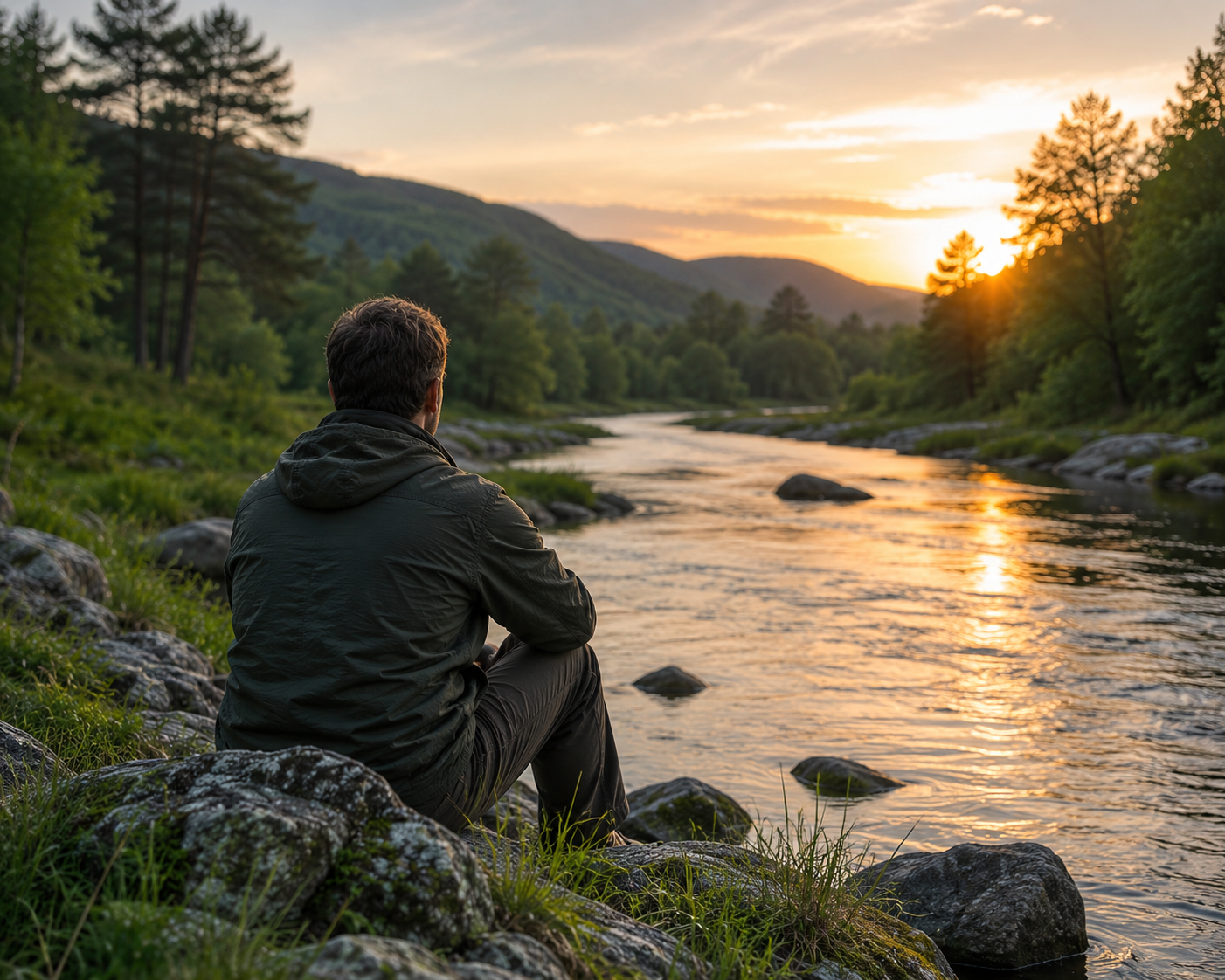

In a world that rarely stops talking, solitude has become one of the most misunderstood human needs. Many people hear the word and think immediately of loneliness, emptiness, or withdrawal, yet solitude can be something far more life-giving: a chosen space in which we step back from noise, recover clarity, and reconnect with who we really are.
Modern life is crowded. Before the day has properly begun, many of us have already been claimed by messages, headlines, obligations, alerts, and the emotional demands of other people. We live in a stream of interruption. Over time, this constant input does more than fill our schedule. It fills our inner world. It becomes harder to hear our own thoughts, harder to understand our own feelings, and harder to tell the difference between what truly matters and what is merely urgent.
This is where solitude becomes so valuable. Solitude is not about running away from life. It is about stepping back long enough to return to it more honestly. It creates room to breathe. It gives the mind a chance to settle. It allows the inner noise – the hurry, the pressure, the old habits of reacting to everything at once – to quieten enough for something deeper to emerge.
One of the greatest benefits of solitude is self-clarity. When we are always responding, always available, and always moving, we can lose touch with ourselves without even realising it. We become efficient in our roles, dependable in our responsibilities, and responsive to the needs of others, but inwardly we may feel crowded, tired, and strangely absent from our own lives. Solitude helps us come back. It gives us the chance to notice what is really going on beneath the surface.
That return is not always easy. Solitude does not instantly create peace. Often, it first reveals what distraction has been hiding. In quiet moments we may become more aware of unresolved grief, fatigue, sadness, uncertainty, or longing. Yet this is not a failure of solitude; it is one of its gifts. We cannot heal, understand, or integrate what we never allow ourselves to face. Solitude gives hidden things room to rise, and in doing so, it opens the possibility of real inner honesty.
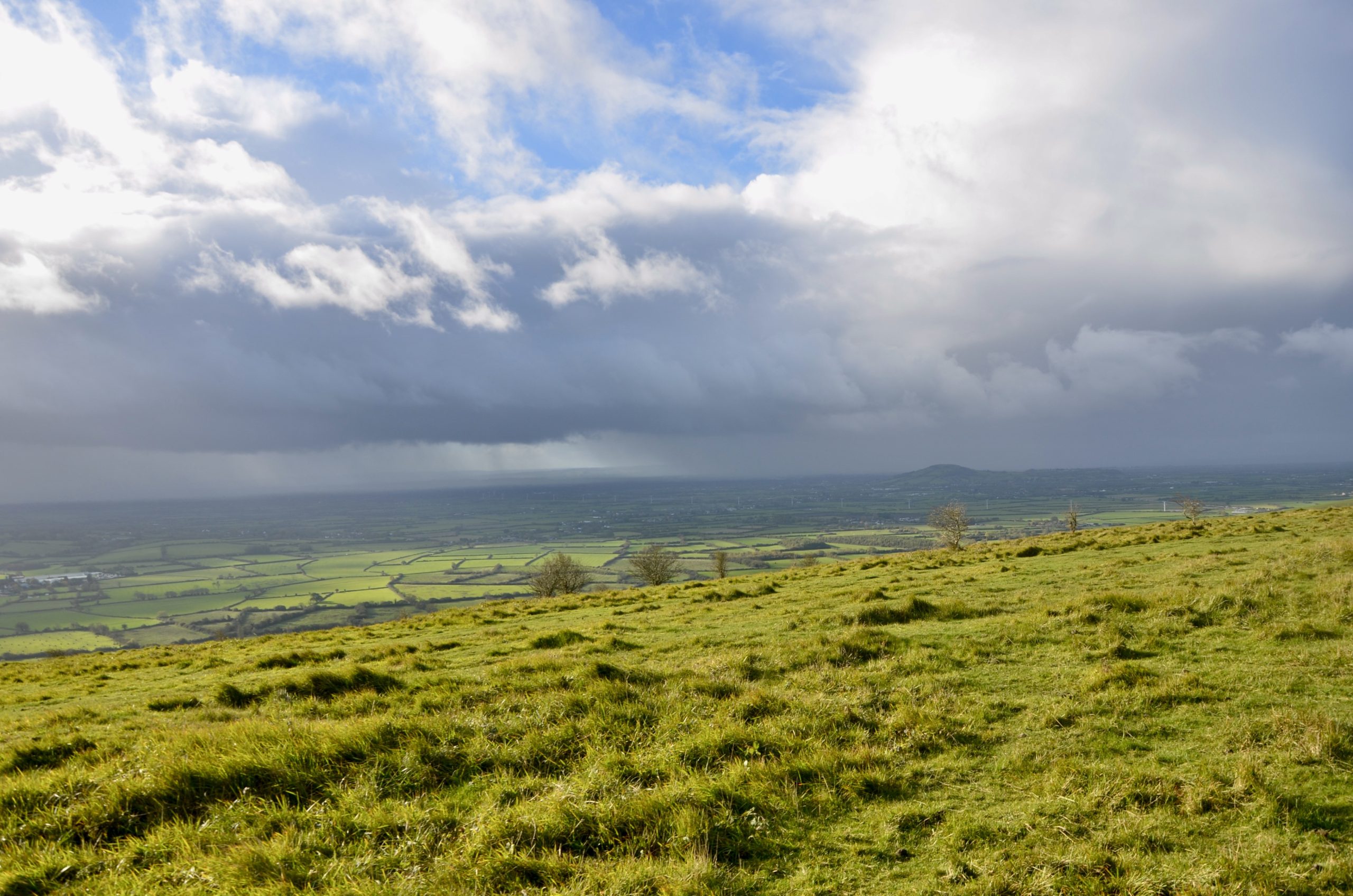
Another important benefit of solitude is that it sharpens attention. When life becomes less noisy, the world becomes more vivid. We begin to notice things we usually overlook – the sound of birds, the change in weather, the feel of wind, the shape of a landscape, the texture of silence, the rhythm of our breathing, the quality of our own presence. Quiet does not reduce life. It enlarges it. What once seemed ordinary becomes more alive simply because we are finally paying attention.
Solitude also helps restore a healthier relationship with time. Much of modern life trains us to move quickly, reply quickly, decide quickly, and fill every gap. Speed becomes normal, and stillness can begin to feel almost uncomfortable. Yet when we slow down, we often discover that not everything needs to be immediate. Not every silence needs filling. Not every moment needs to be productive. Solitude interrupts the tyranny of urgency and reminds us that a meaningful life cannot be built entirely on acceleration.
It is also important to say that solitude is not the same as loneliness. Loneliness is the pain of unwanted disconnection. Solitude, by contrast, is chosen aloneness. It is a deliberate making of space. The two may overlap at times, but they are not the same. In fact, one of the valuable things solitude can do is help us learn the difference. It teaches us that being alone does not automatically mean being abandoned, and that silence is not always something to fear.
This distinction matters because many people have become uncomfortable in their own company. We are so used to filling every empty moment with noise, entertainment, or communication that being alone with our thoughts can feel strange. But solitude builds inner resilience. It strengthens our ability to remain with ourselves without needing constant distraction. It teaches us that not every uneasy feeling must be escaped immediately. That is a quiet form of strength, and it has deep implications for emotional maturity.
Solitude also supports authenticity. Much of life encourages performance. We adapt to expectations, fulfil roles, and learn how to function in ways that keep everything moving. There is nothing wrong with responsibility, but without intervals of quiet we can forget who we are beneath our roles. Solitude helps loosen the grip of performance. It gives us space to ask deeper questions: What am I feeling? What matters most to me? What have I been avoiding? Where have I become out of alignment with myself? These are not small questions. They are the questions that shape a life.
Far from making us less loving, healthy solitude can actually deepen our relationships. When we have no room within ourselves, it becomes difficult to offer real presence to others. We may be physically there, but inwardly distracted, depleted, or fragmented. Solitude helps create inner space. It allows us to return to the people we love with more steadiness, more patience, and more honesty. It is not a rejection of connection; it is a way of strengthening the quality of it.
There is, of course, an unhealthy form of aloneness. When withdrawal is driven by fear, bitterness, or avoidance, it can harden into isolation. But true solitude is different. True solitude softens rather than hardens. It restores rather than diminishes. It opens the inner life instead of shutting it down. Healthy solitude helps us become more grounded, more truthful, and more able to engage with life well.
Perhaps this is why solitude matters so much in our time. We live in an age of unprecedented stimulation, constant availability, and endless digital contact, yet many people feel inwardly fragmented. Solitude offers a counterbalance. It reminds us that the inner life must be protected if it is to remain alive. It teaches us that quiet is not emptiness, but a threshold. It is a place where we can gather ourselves, hear what is true, and return to the world less scattered.
This summer, as I publish more of my thoughts on this subject, I want to invite readers to reconsider solitude not as something bleak, but as something necessary. Not as an escape from life, but as a way of meeting life more fully. In solitude we may discover that what we feared as emptiness is actually space – space to think, space to feel, space to listen, space to recover, and space to return to ourselves.
In the end, the benefits of solitude are not dramatic in the way modern culture usually celebrates. Solitude does not shout. It does not perform. It works quietly. It clears, steadies, reveals, and restores. And in a noisy world, that quiet work may be one of the greatest gifts we can give ourselves.