
The Inner Citadel and Self-Trust
Welcome to the Solitude Newsletter!
Self-confidence and self-trust are not luxuries for the inner life; they are the very muscles that allow solitude to reshape us rather than merely expose us. When we dare to believe our own experience, quiet stops being an emptiness to flee and becomes a workshop in which a more truthful life can be built.
The Inner Citadel and Self-Trust
The manuscript returns again and again to the image of an inner citadel, a protected inward structure from which we can live “more truthfully” even when the world is loud. Self-trust is the gatekeeper of that citadel: without some confidence in our own perception, we simply hand the keys to whatever noise arrives first.
Ralph Waldo Emerson called this inner confidence the essence of genius, insisting that “to believe your own thought… is genius,” and urging, “trust thyself: every heart vibrates to that iron string”. When we learn to treat our own felt sense, our quiet convictions, and our hard-won insights as worthy of attention, the citadel stops being a theory and becomes a place we actually inhabit.
Solitude as a Training Ground for Confidence
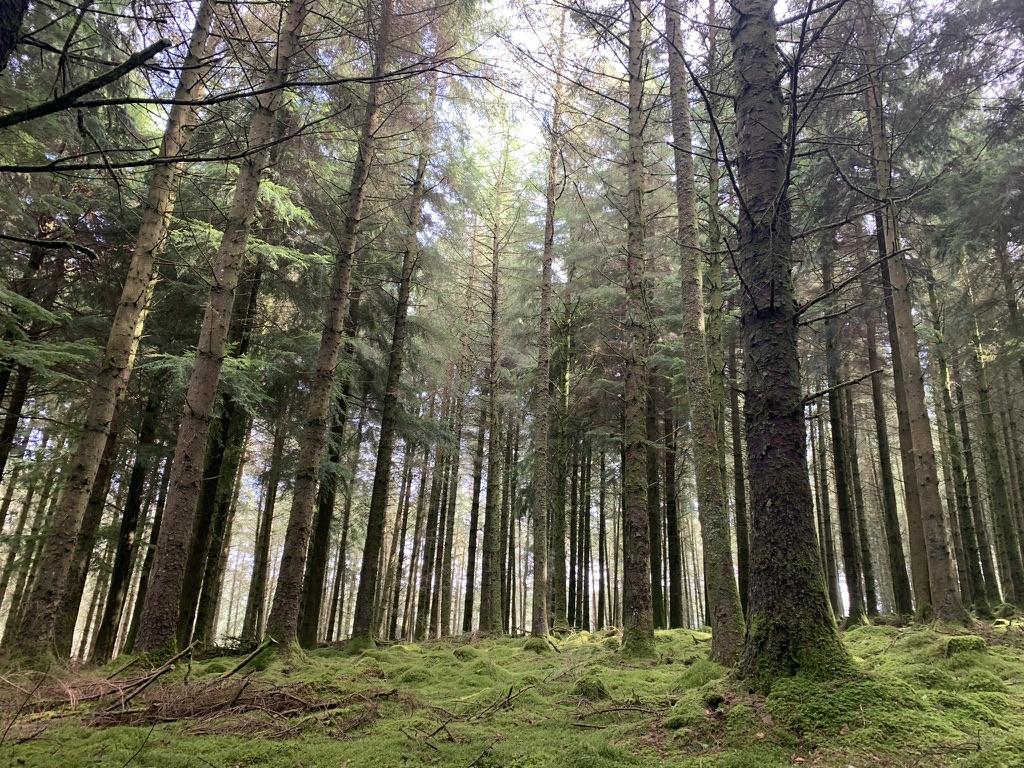
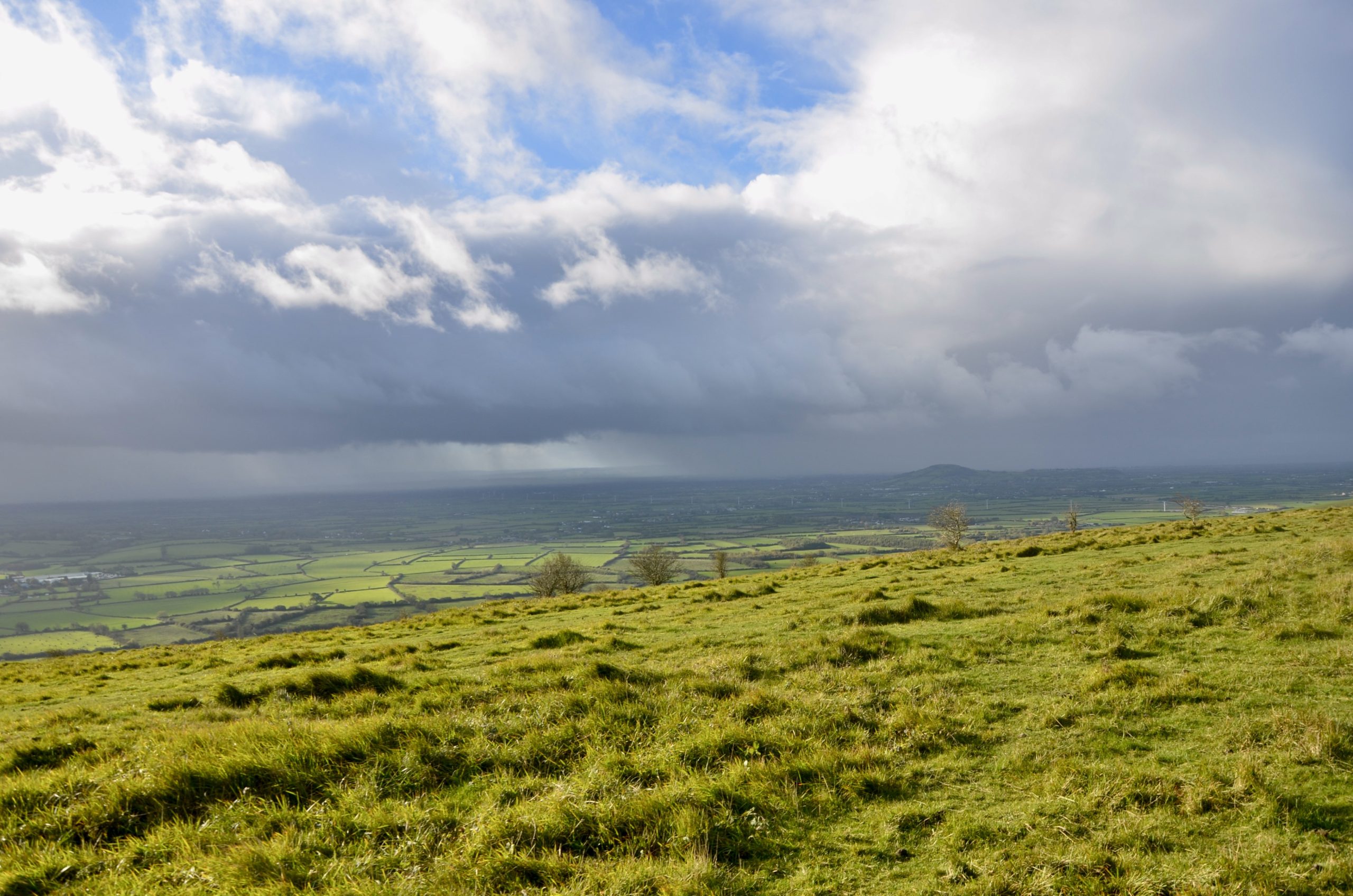
Extended solitude on Dartmoor revealed that quiet does not immediately soothe; at first, it reveals our fears, habits, and old identities more starkly than any busy day ever could. Yet it was precisely in remaining with this exposure that a deeper, steadier confidence began to grow: the sense that we can meet our own thoughts and feelings without fleeing back into noise.
Modern research echoes this: time alone in nature reduces stress, restores emotional balance, and offers a break from external demands, all of which create the conditions in which self-trust can actually be heard. Solitude, in other words, is not about proving we need no one; it is about discovering that our own inner voice is capable of bearing more weight than we’ve allowed it so far.
Thoreau, Emerson, and the Courage to Be Oneself
Henry David Thoreau’s experiment at Walden Pond was an unapologetic act of self-confidence: he left society to “follow the bent of [his] genius,” building his own shelter, tending his own land, and trusting that his inner compass was worth betting his life upon. In one of his most famous lines, he wrote that “if one advances confidently in the direction of his dreams… he will meet with a success unexpected in common hours,” tying outer movement to inward trust.
Emerson, Thoreau’s friend and mentor, sharpened the same point in “Self-Reliance,” warning that “imitation is suicide” and that polite conformity slowly starves our real life. Both men saw solitude not as escape but as a crucible in which self-confidence and self-trust are forged—where we stop quoting everyone else and begin, finally, to listen to what is most deeply ours.
From Noise to Inner Authority
The manuscript describes modern life as a state of “continuous access,” where our minds are “continually entered” by messages, demands, and expectations until our own sense of what is true grows thin. We become “the sum of our responses to other people,” competent in our roles but estranged from our centre.
Withdrawal, in this context, is not coldness but “a chosen reduction of access,” an act of “adult stewardship” over what enters the soul. Each time we choose to delay a reply, to switch the phone off, to walk without headphones, or to sit in honest silence, we are practising a small vote of confidence in our own inner authority. Over time, these small refusals of noise accumulate into a felt sense that we can consult ourselves before we consult the crowd.
Self-Trust as the Heart of Growth
Self-development in the manuscript is not framed as inventing a new person but as having “the courage to stop hiding from the one already there”. That work depends on self-trust: the willingness to believe that what we find in ourselves is not automatically suspect, childish, or dangerous, but often the starting point of honest change.
Psychologically, this aligns with research showing that a stable inner confidence – what psychologists sometimes call “self-efficacy” – is a strong predictor of resilience, creative problem solving, and the capacity to adapt to stress without collapsing into avoidance. When we trust that we can face our own grief, confusion, and desire without being annihilated, solitude becomes a laboratory for growth rather than a courtroom of self-judgment.
Returning to Others with Confidence
Crucially, the manuscript insists that solitude is not a rival to relationship but one of its disciplines. If “there is no room for yourself,” it asks, “how can you possibly have room for others in your life?”. Self-confidence here is not swagger but the quiet capacity to arrive in relationship without asking the other person to hold together what we have refused to face inwardly.
Emerson framed this as the capacity to “keep… the independence of solitude” even in the midst of a crowd, to bring “more presence and less hunger” into our connections. When we cultivate self-trust in solitude, we come back to those we love less reactive, less defended, and less dependent on them to rescue us from our own interior weather.
A Small Practice for the Week Ahead
To bring this down into the grain of daily life, you might try a simple confidence practice drawn from the citadel’s spirit:
- Once each day, sit alone without devices for ten minutes and write the sentence: “Today, my inner voice is saying…” and keep going without editing.
- When you finish, choose one small action – a boundary, a pause, a changed response – that honours what you have just written, even if no one else would notice.
This is how self-confidence and self-trust are actually built: not as a single heroic decision, but as a series of quiet, repeated acts in which we treat our own perception as worthy of response.
Until the next time – go well and trust yourself!