Solitude is often misunderstood.
Many people confuse it with loneliness, but the two are very different. Loneliness feels like absence; solitude feels like presence. It is the deliberate choice to step away from noise, demands, and constant distraction so that you can hear your own thoughts again. In a world that rewards busyness and endless connection, solitude can become a powerful act of renewal.
One of the simplest and most effective ways to enjoy solitude is through journalling. Writing creates a private space where thoughts can land without interruption. It does not need to be polished or profound. In fact, the most useful journalling is often raw and unfiltered.
You might begin by asking yourself simple questions: What am I feeling right now? What is taking up my mental energy? What do I need more of in my life? Over time, journalling helps reveal patterns. You may notice recurring fears, desires, frustrations, or dreams that are usually buried beneath daily routines. A practical tip is to keep the process easy. Use a notebook you enjoy, write for just ten minutes, and do not worry about grammar or structure. The goal is honesty, not performance.
Meditation offers another doorway into solitude. While journalling gives your inner voice room to speak, meditation teaches you how to listen beneath the noise. This can be especially valuable if your mind is constantly moving from one task to another. Meditation does not require a perfect posture, a silent retreat, or long periods of stillness. It can begin with five minutes of simply sitting and noticing your breath. When thoughts arise, as they always will, the practice is not to fight them but to observe them and gently return your attention. Over time, meditation cultivates calm, clarity, and emotional steadiness. A helpful example is to treat meditation like brushing your teeth: small, regular, and non-negotiable. Five minutes each morning can do more than one hour done rarely.
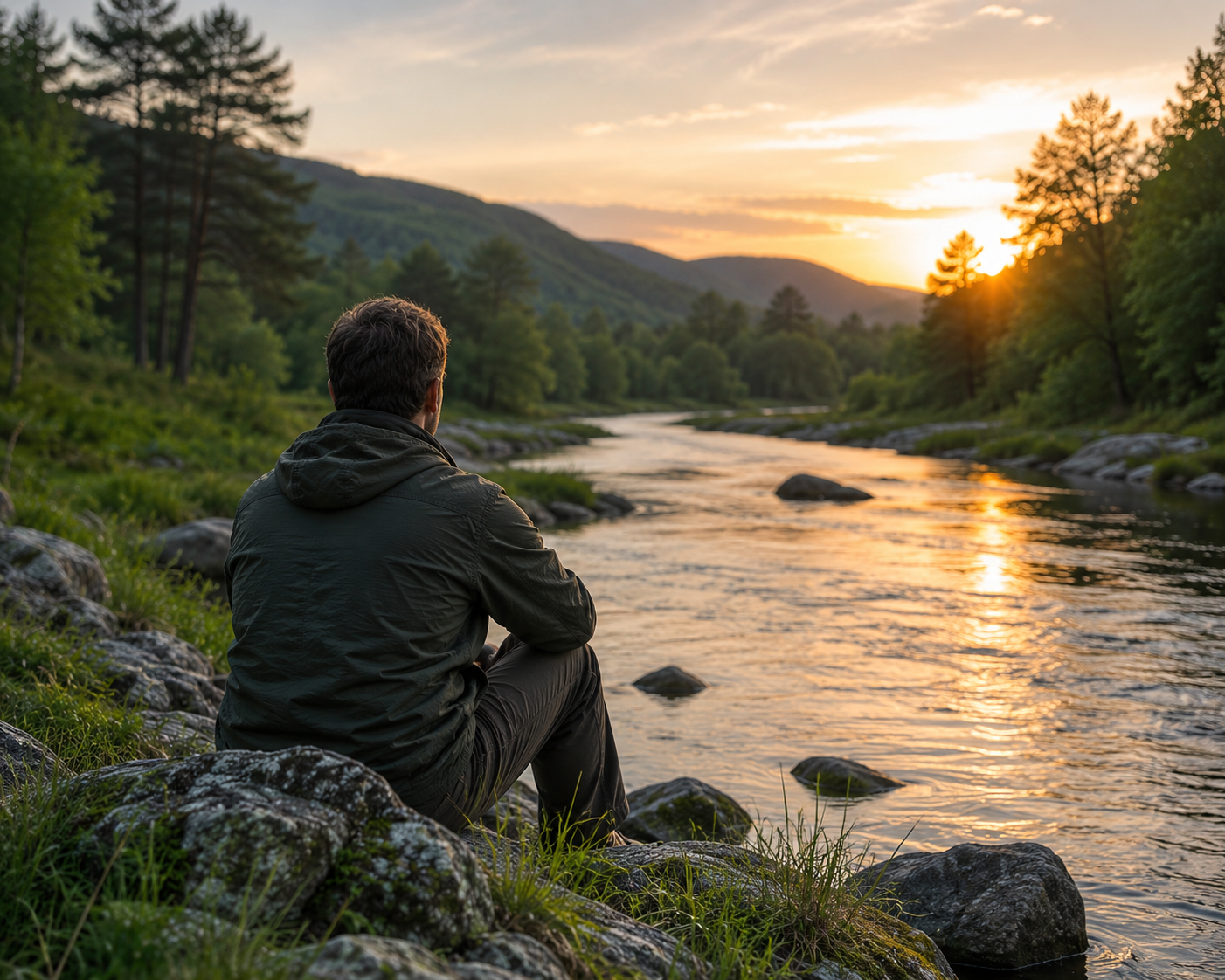
Observation is a quieter but deeply transformative form of solitude. It means consciously paying attention to the world around you and to your own responses within it. This could be as simple as sitting in a garden, watching the movement of clouds, listening to birdsong, or noticing the rhythm of your breath during a walk. Observation slows life down. It interrupts automatic thinking and invites wonder back into ordinary moments. It also reveals how often we rush past beauty without seeing it. A practical way to build this habit is to go on a “silent walk” without music, podcasts, or your phone in hand. Notice colours, textures, sounds, and sensations. The more you observe, the more rooted you become in the present.
Solitude is also an ideal setting for habit breaking. Many of our habits are reinforced by social expectations, repetitive environments, and unconscious routines. When you step into solitude, you create enough space to examine them. This might mean noticing how often you reach for your phone, how quickly you say yes when you mean no, or how often you fill silence with distraction.
The first step in breaking a habit is awareness. The second is replacement. If you want to reduce mindless scrolling, replace that moment with something intentional such as reading one page of a book, making tea slowly, or stepping outside for fresh air. Solitude gives you the distance needed to ask a more powerful question: Is this habit serving the life I want to build?This naturally leads to one of the deepest gifts of solitude: the chance to set a new paradigm for how you want to live. A paradigm is more than a goal. It is the underlying model or belief system that shapes your decisions. Many people live according to inherited paradigms without realizing it. They believe success means exhaustion, productivity means self-worth, or rest must be earned. Solitude allows you to challenge those assumptions. You can ask: What do I actually value? What kind of pace feels healthy to me? What would my life look like if it reflected my deepest beliefs rather than other people’s expectations?For example, someone may realize during a period of solitude that they no longer want a life built around constant urgency. Their new paradigm might be one of intentional living, where they prioritise meaningful work, slower mornings, deeper relationships, and regular time in nature. Once that paradigm becomes clear, choices begin to align with it.
They may change how they schedule their week, protect time for reflection, or stop saying yes to things that create unnecessary overwhelm.To achieve this kind of shift, it helps to create a personal solitude practice. Set aside regular time, even if it is only twenty minutes a few times a week. Remove distractions. Bring a journal. Sit in silence. Walk alone. Ask bigger questions and give yourself permission not to rush the answers. Solitude is not about escaping life. It is about returning to it with greater clarity and intention.When approached with openness, solitude becomes far more than time alone. It becomes a place of insight, healing, and realignment.
Through journaling, meditation, observation, habit breaking, and the creation of a new life paradigm, solitude can help you reconnect with who you are and how you truly want to live. In that quiet space, you may discover not emptiness, but your deepest source of strength